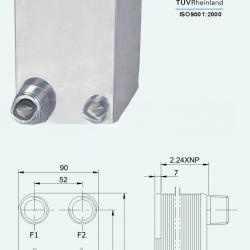
HRALE B3-16A Condenser
Price on request
Pricing is provided on request — use the quote form below.
- Port
- NINGBO
- Minimum Order Quantity
- 1 Piece/Pieces
- Supply Ability
- 500,000 Piece/Pieces per Year
- Payment Terms
- L/C,T/T

Price on request
Pricing is provided on request — use the quote form below.
Something wrong with this listing? Report it
Condenser, Evaporator, Subcooler·We have CE, UL, ISO9001
| Place of Origin | Zhejiang China (Mainland) | Model Number | B3-16A |
|---|---|---|---|
| Type | Condenser | Application | Heater Parts |
| Certification | UL | Category | Heat Exchanger |
| CE, UL, TUV | ISO9001:2000 | Details | Condenser, Evaporator, Subcooler · We have CE, UL, ISO9001 |
| Packaging Detail | CARTON BOX, METAL PALLET, WOODEN BOX |
|---|---|
| Delivery Detail | 2 WEEKS |
| Technical parameter | |
| Product name | Condenser, Evaporator, Subcooler |
| Product model | B3-16A |
| Unite heat exchanging area | 0.016m2 |
| Maximum flowrate | 8m3/h |
| Plate material | 316L or 304 stainless steel |
| Welding material | 99.9% copper |
| Thickness of plate | 0.3mm |
| Volume per channel | 0.029L |
| Maximum number of plate | 60 |
| Design pressure | 1.0MPa or 3.0MPa |
| Test pressure | 2.0 MPa or 4.5MPa |
| Design temperature | -195 ~+220 |
| Connections | the biggest screw thread pipe for water:1" the biggest welded pipe for other fluid: 7/8" |
| Capacity | 1-7KW |
| Basic flow disposition | F1-> F3 F4-> F2 |
| Application scope | The wall heater, heats the water heater, the cold temperature testequipment, the small refrigeration equipment and so on |
Heat transfer occurs when there is a difference in temperature between two mediums. Heat will travel from the hot source to the cold source. The rate at which the heat transfer occurs at is determined by many factors such as the heat conductivity of the two materials andthe difference in temperatures of the two mediums. Convectiuve heat transfer occurs when the materials are moving against each other.
Plate heat exchangers have significantly good heat transfer rates because they use metal plates which have high heat conductivity rates and the plates are extremely thin. The plate heat exchangers also achieve high amounts of heat transfer through convective forces with both working fluids. With large temperature differentials, great amounts of heat transfer can be achieved using a plate heat exchanger.
Corrosion is usually how these units will fail. Use fluids with reasonable pH levels to ensure a long lasting life. Hard water will corrode faster than regular water. (Use distilled if possible; Distilled should never corrode it) Salt water will corrode stainless steel very fast. It is recommended to clean the exchanger often if you are using corrosive fluids. Normal usage (non-corrosive fluids) should expect 10-20 years of life. Fluids containing chlorides will corrode the unit quickly.
This is an extremely popular unit for wood burning furnaces, radiant floor systems, refrigerant systems, straight vegetable oil conversions, beer chilling, air conditioning system and solar water heating systems. It will work for any application in which the desired result is for two fluids (liquid or gas) to exchange heat.
Fluid A passes from the port on the left of the heat exchanger through every other channel created by the plates to the opposite end port on the left of the heat exchanger (looking at it the long way). Fluid B passes from the port on the right through the other channels created by the plates and comes out the other port on the right side. The fluids are essentially touching each other through the plates and heat is transferred from the hot fluid to the cold fluid. (but the fluids do not mix)
Toeflex Copper Caps
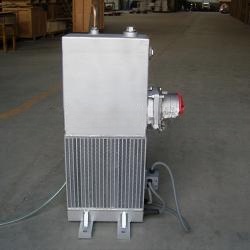
Construction Machinery
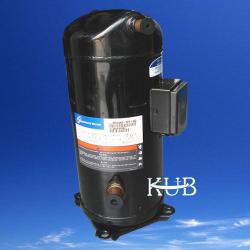
copeland compressor 3hp
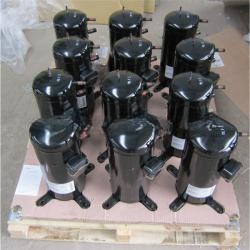
Sanyo scroll compressor R410A 50Hz 380-415V/60Hz 440-460V
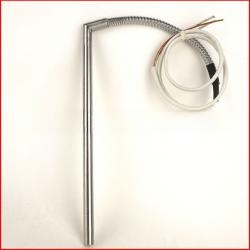
CE Approval Electric Thermocouple Tube Heating Cartridge Heaters
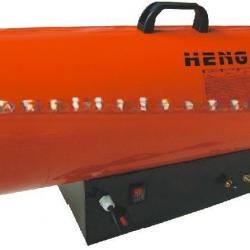
50KW industry Mobile Gas Heater